
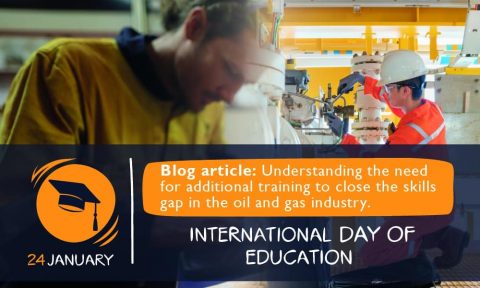
Understanding the need for additional training to close the skills gap in the oil and gas industry

Man does additional training to close skills gap and maintenance man repair pipeline oil and gas industry.

January 24 is celebrated as the International Day of Education to highlight of the role of education in promoting world peace and development. While this day emphasizes the need for equitable, quality learning for all, it also carries an important message for the industry in general.

This blog article discusses why employee training is important for the oil and gas industry. It also shows what causes the existing skills gap, how this gap can be bridged and the challenges of retraining employees. It emphasizes the importance of ongoing training for engineers, maintenance personnel & operators in the industry with a view to taking advantage of the latest technological advancements.

Continue reading

Hydrogen valves and typical application challenges

Lamp with green tree and H2 symbol and typical hydrogen applications and challenges.

Modern hydrogen applications demand durable valves. Beside the challenges with the media hydrogen they also often have to operate reliably under high pressure or at extremely low temperatures. There are some challenges that the industries have to face. In this blog article, we describe relevant key data on hydrogen, hydrogen applications and hydrogen valves.

Continue reading

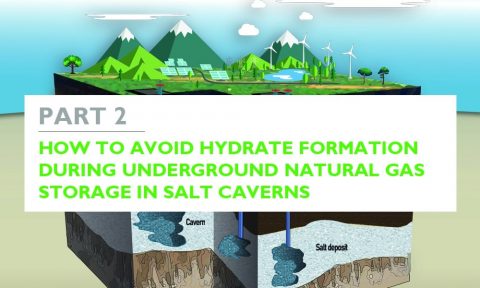
How to avoid hydrate formation during underground natural gas storage in salt caverns

3d image of natural gas storage in salt caverns and how to avoid hydrate formation.

In this case study, I focus on how to avoid hydrate formation in natural gas pressure measurement pipelines. I describe the traditional approach to avoid hydrate formation during natural gas storage in salt caverns. Furthermore, I explain a patented customer solution that AS-Schneider has industrialized.

Continue reading

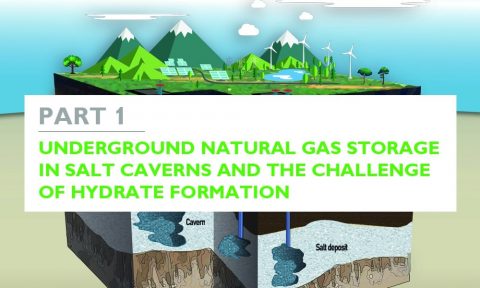
Underground natural gas storage in salt caverns and the challenge of hydrate formation

3d image of natural gas storage in salt caverns and the challenge of hydrate formation.

Many of my customers use natural gas storage facilities in order to balance out low and peak demands over the course of a year.
Over the years, I have gained a lot of valuable experience on this topic. This knowledge is what I would like to share with you in the context of a blog article.

Continue reading

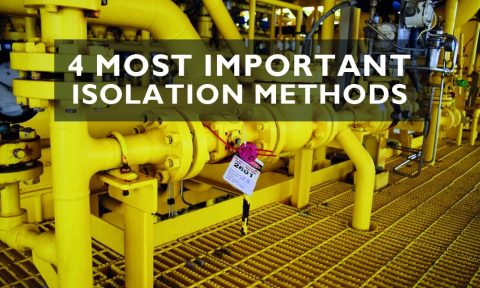
4 most important mechanical isolation methods of process piping & equipment

Oil and gas plant with closed and locked valve shawing different isolation methods.

Positive isolation is the isolation of process piping, equipment, or vessels from hazardous materials such that it is impossible for the material to enter the work area. Positive isolation must remove all risk of accidental reconnection to the source of the hazard due to equipment failure or operator error. There are several methods of achieving positive isolation some of which are discussed below.

Continue reading

Case Study: High temperature DBB valves for steam injection – A common enhanced oil recovery method

Infographic of solar steam process (steam injection) as an enhanced oil recovery application.

Case study about high temperature Double Block & Bleed valves for steam injection. We have successfully installed the DBB valves at the Amal oilfield in Oman which uses “green” steam, generated at the Miraah solar thermal facility.

Continue reading

5 important facts for a safe and transparent (remote) third-party inspection

Safe and transparent through your third-party inspection (remote inspection).

We are all facing many restrictions due to the pandemic. Therefore, we need to find ways to still provide the best possible support to our customers. One digital service that our customers can use is our third party inspections – better said remote inspections.
Our customers can use the remote visual inspection to check the valve quality before shipping.

Continue reading

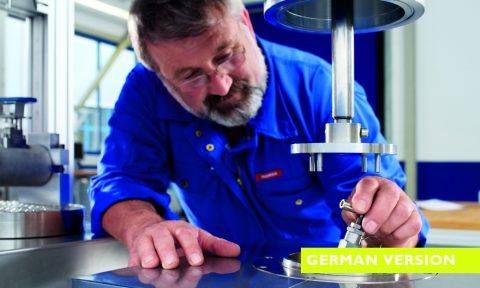
Auswirkungen der neuen TA-Luft auf die Armaturen-Industrie

Man is testing a valve according to revised TA-Luft emission standard.

Die überarbeitete TA-Luft Emissionsnorm wird sich auf die ISO 15848-1 beziehen, um die Allgemeinheit und die Nachbarschaft zu schützen. Und um schädliche Auswirkungen auf die Umwelt durch Luftverschmutzung zu verhindern. All das, um ein hohes Schutzniveau für die Umwelt als Ganzes zu erreichen.

Continue reading

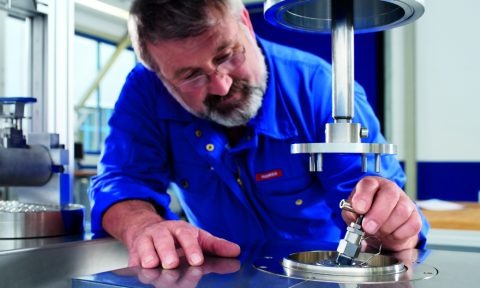
Impact of the revision of the TA-Luft on the valve industry

Man is testing a valve according to revised TA-Luft emission standard.

The revised TA-Luft Emission Standard will refer to ISO 15848-1 to protect the general public and the neighborhood. And to prevent harmful effects on the environment caused by air pollution. All that in order to achieve a high level of protection for the environment as a whole.

In my blog post, I would like to explain what impact this change will have on the valve industry.

Continue reading