This article presents an overview of valves, their functions and the commonly used types of valves in the industry. The design principle, application areas, benefits and disadvantages of various types of valves are presented. Different methods of valve classification are also discussed to highlight the key considerations in valve selection.
Continue readingHow to isolate a process line from process instrument with a DBB valve
Block and Bleed and Double Block & Bleed isolation systems are used in process instrumentation to isolate your instrument from the main process line. The isolation valve(s) stop the flow from the upstream, while the bleed valve removes any pressure or residual product that remains in the downstream section or in the section between the two valves.
Use of block and bleed valves is mandatory in many industrial processes for isolating the measuring instrument from the process line. This allows maintenance work to be performed on the instrumentation without the need to shut down the entire operation. There are two approaches to the installation of a block and bleed or a double block and bleed setup.
Continue readingHow suppliers in the oil and gas industry can contribute to the implementation of the Sustainable Development Goals
This article presents a broad overview of the 17 SGDs and how the oil and gas industry can contribute to the realization of these goals. The policies and initiatives of an internationally established valve supplier to the oil and gas industry, AS-Schneider, for the realization of the 17 SGDS are presented and discussed.
Continue readingWhat is the significance of the VDMA network “Power-to-X for Applications” for mechanical & plant engineering?
This year marks the 130th anniversary of the Mechanical Engineering Industry Association (VDMA). A one-of-a-kind group uniting the mechanical engineering industry. In celebration, we talked to a dear colleague and member of the VDMA network “Power-to-X for Applications”, Björn Bofinger.
Get ready to be surprised by the enthralling insights he shared. If you don’t know much about the VDMA network “Power-to-X for Applications”, this is your intro! Now, let’s find out how the network supports the mechanical and plant engineering industry in meeting today’s and tomorrow’s challenges when it comes to power-to-X applications.
Continue readingNew chemical plant complies with the stricter TA-Luft amendment in the field of valves
The amended Technical Instructions on Air Quality Control (TA-Luft) regulation came into effect on December 1, 2021. The updated regulation specifies stricter new limits for fugitive emissions from chemical plants. This is a tough challenge for the chemical industry.
In my article, I describe a case study of the challenge engineers faced in selecting compliant valves when building a new chemical plant in Germany.
Future importance of Hydrogen & Power-to-X in industrial applications at the EU level
Welcome to today’s interview! It features an insightful conversation I had with Dr. Carola Kantz, deputy managing director and a valuable member of the VDMA “Power-to-X for Applications,” on the future importance of hydrogen and Power-to-X (P2X) in industrial applications at the EU level.
The topic breaks down into four chapters and touches the core areas of interest with explicit description: (1) Hydrogen in the context of Power-to-X; (2) Legislations for climate protection; (3) Building a hydrogen economy; (4) Involvement of the mechanical & plant engineering sector.
Continue readingTA-Luft amendment – What will change for you as a plant planner and plant operator in the area of valves
The Technical Instructions on Air Quality Control or TA-Luft governing Germany’s industrial plants were recently updated. The goal of the TA-Luft is to reduce emissions and improve air quality.
In this article I will give you an overview of the TA-Luft amendment and explain the specificities and requirements applicable to industrial valves. Furthermore, I analyze the changes to the old TA-Luft to identify challenges and solutions.
Plant operators and plant planners can’t miss out on this info to run compliant facilities.
Continue readingReliable and accurate sampling system for natural gas applications
My previous article in this series explained what are the main issues in obtaining a representative sample in NG applications.
This case study demonstrates a reliable sampling solution currently used by plant operators. It helps plant operators to obtain representative samples.
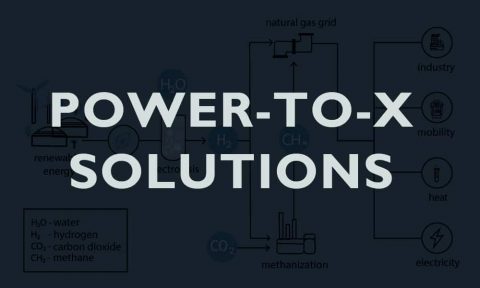
Continue readingWhat are Power-to-X solutions?
This article provides an overview of the various Power-to-X solutions. It explains what is Power-to-X, why it is important for decarbonization and how it can be used for efficient utilization of variable energy sources. The various energy carriers that can be used to store renewable energy for later use, or for easier transportation, are summarized. The benefits and challenges of Power-to-X are discussed and examples of various solutions being implemented around the globe are presented.
Continue readingWhat are the main issues in obtaining a representative sample in NG applications?
In this article, I present the major issues associated with obtaining a representative sample in NG applications. The article explains what is representative sampling, and why sampling is important in the natural gas industry. I discuss factors that determine what should be a suitable sampling frequency in a process, and which sampling standards can be followed to ensure representative sampling.
Several major issues in obtaining a representative sample, and common design flaws that lead to poor sampling are presented and discussed. In addition, I present how a suitable probe length can be determined and how the probe should be installed. The different types of commonly used sampling probes are also compared and discussed.
Continue reading