

Skip to content

From a Valve to a Reliable Data Point
Why the Asset Administration Shell matters most for mechanical components

The digital twin has been a talking point for years, usually in connection with sensors, software and smart field devices. Yet look at any process plant and most of what you see is not smart at all. Kilometres of piping with flanges and fittings, countless valves, manifolds and other mechanical components. Our own contribution to this is a small but critical part: the instrumentation valves that isolate and connect every measuring point. Often a smart transmitter sits right on top of them. The valves themselves, like most of the equipment around them, have no power supply, no firmware and no interface.

They still matter. They are safety-relevant, they need maintenance and they have to be documented. And because there are so many mechanical components in a plant, they hold a large and often overlooked opportunity. Give each of them good digital data, and everyone who works with them has an easier job.

The gap is information, not intelligence

A large part of a plant’s documentation comes from the many suppliers who deliver equipment to a project. Operators and contractors have long defined what that documentation must contain, and often in which format it has to be uploaded to their portals. Yet supplier data still frequently arrives as files rather than as data: documents that people can read, but that systems cannot easily process, and that do not stay linked to the component over its life. Even where operators run mature maintenance and engineering systems, supplier information rarely arrives in a form those systems can use directly.
The International Association of Oil & Gas Producers (IOGP) comes to the same conclusion in its Information Standards Toolkit, published in 2026. Only a small share of information exchange in the industry is truly digital, and even documents created digitally are often not handed over in digital form. IOGP names equipment suppliers explicitly as one of the groups that should provide information in a form the whole supply chain can use.
The Asset Administration Shell, or AAS, is the international standard designed to close this gap. NAMUR, the user association of automation technology in the process industries, describes it as a kind of digital filing cabinet. Everything known about a component is stored in standardised compartments, called sub-models, and can be retrieved in the same way no matter who supplied it.
Industrial processing plant with extensive pipelines, steel structures, processing towers and chimneys under a clear blue sky.
From the filing cabinet to the Asset Administration Shell: the same information, in standardised digital compartments.

What changes in day-to-day work

In the atp magazin, Thomas Tauchnitz has argued that the discussion about the AAS should move away from demonstrators towards down-to-earth use cases. Mechanical components are a good place to start:
Everyday question Today, without structured data With the Asset Administration Shell
Which valve is installed here? Searching project folders, PDFs and handover packages Scan the code on the product and go straight to its data
Which materials and certificates apply? Spread across datasheets, drawings and separate certificate files Available in one place, linked to the individual product
Which spare part do I need? Ask the manufacturer and wait for an answer Product and parts data directly accessible
How do I maintain it correctly? Operating manual as a PDF, copied over by hand Documentation structured according to VDI 2770, ready to use
What makes this work is a unique identity on the product. Under IEC 61406, every component carries a globally unique, machine-readable identifier, typically a QR code, that links it to its digital data. Next to the QR code we print a human-readable serial number, a change we made back in 2019 based on customer feedback. In hazardous areas or offshore, where a smartphone is often not at hand, the number can simply be read out over the radio to a colleague in the control room.

Equipment and tag: who links what?

Operators think in tags, the functional positions in their plant. A supplier delivers equipment, the physical components. The AAS belongs to the equipment, and it should stay with it. If a component at a measuring point is replaced, for example a transmitter after calibration, the identity of every other component must remain intact. Leading operators insist on exactly this.
Where the operator provides the tag assignment with the order, we include it in the delivered data. More often, the link is made on site: a measuring point consists of several components from different suppliers, and unless they arrive pre-assembled, they come together only during construction. The AAS supports both routes.

What about existing plants?

Most plants operate for decades, so the realistic question is not how a new plant is equipped, but how existing ones benefit. Here the good news is that nobody has to digitise a whole plant at once. Two practical routes have emerged:

  • Grow with every replacement. Every component replaced during maintenance or a turnaround can arrive with its AAS. Over time, the share of documented equipment in the plant grows without a separate project.
  • Retrofit by product type. For components already installed, the type designation on the nameplate is often enough to retrieve the type-specific data, such as datasheets, drawings and operating instructions, from the manufacturer. Some manufacturers already provide this on a large scale, including for their installed base.

Neither requires a fully integrated digital landscape on day one. Operators can start with critical or frequently maintained assets and store the AAS files they receive in a simple repository. They can connect them to their systems later. The atp magazin recommends exactly this pragmatic approach: an interim solution is better than no structured data at all. A technician who scans a code on a newly installed valve and finds its documentation straight away saves time today. As systems are connected step by step, the data is already there.

Our perspective as a component supplier

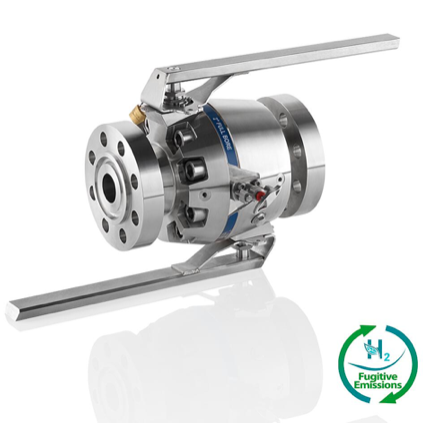
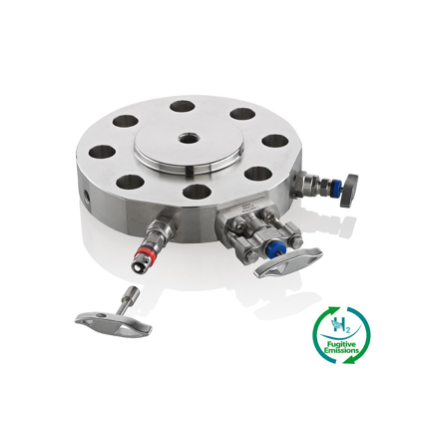
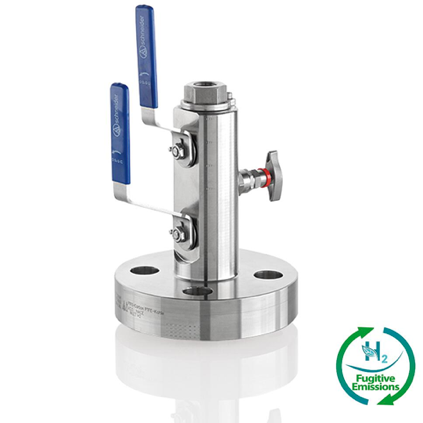
We did not come to this topic recently. The first predecessor of our digital twin went live in 2019, and digital product information is available today for our E-Series, Taurus and VariAS product lines, monoflanges, ball valves and air headers. Since then we have worked in the bodies that shape the standards: in the Open Industry 4.0 Alliance and in the Digital Data Chain Consortium (DDCC), where operators and manufacturers from the process industry work on unique identification, digital manufacturer documentation and neutral exchange platforms.

Taurus
SC-03-20-WC048001

Monoflange
SC-09-22-AW068001
VariAS
SC-05-22-AF735001
E-Series
SC-04-22-AO294004
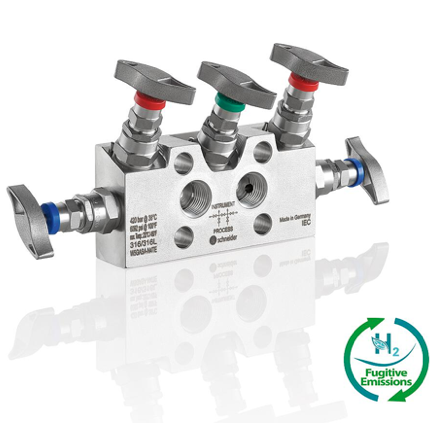
Try it yourself: scan a code to open the digital product information of a delivered AS-Schneider product.

We are now moving this to the AAS standard. Proof-of-concept projects with an operator and with OEM customers are under way, and regular operation is about to start. The first release covers the digital nameplate and handover documentation according to VDI 2770, including material certificates where they were ordered for the delivery. Technical data follows as the next step. Because the AAS is modular, further sub-models can be added without starting again.

We are not alone in this. A growing number of manufacturers already provide an AAS, from automation suppliers such as Endress+Hauser, Siemens, Harting and SICK to process industry specialists such as R. STAHL. And because the AAS is an international standard, defined in IEC 63278, customers are not locked in. Data from different suppliers follows the same structure, can be used with the same tools and remains readable independently of any single vendor.

Available for the life of the plant

A plant runs for 30 years or more, so the data has to last at least as long. The AAS is delivered as a standardised file that the operator can keep in its own systems. Alternatively it can be provided on a neutral exchange platform, as foreseen in the DDCC concept. Both options keep the data with the operator and avoid open connections from the plant network to a supplier’s server.
Today the AAS captures the state at handover. Looking further ahead, the idea of a shell that both sides keep up to date over the life of the asset is under discussion, with the manufacturer adding product updates and the operator adding operating and maintenance history. This is still at the concept stage, but it shows where the journey could lead.

CFIHOS and AAS: two standards, one goal

For oil and gas operators, the key reference is CFIHOS, the Capital Facilities Information Handover Specification managed by IOGP. It defines which information an operator needs when a plant is handed over: tag data, equipment data and documents. Its latest release is aligned with the IOGP JIP33 procurement specifications and enriched with ISO 14224, the international standard for reliability and maintenance data.
The AAS, in turn, defines how that information is structured and exchanged. IOGP’s toolkit draws the same line: the AAS provides the structure, but does not define the content requirements. So the question is not either-or. CFIHOS makes sure the operator receives the right information. The AAS makes sure it can be used digitally.
We are prepared to deliver data according to CFIHOS and are currently discussing a first lead project with several customers.

Getting started step by step

Who creates the data, and how does it get into the customer’s systems? The division of labour is clear.
As the manufacturer, we do the preparatory work: we create the AAS for our products and keep it up to date. Connecting it to the customer’s own systems is not something every component supplier can provide by default, but nobody has to start from scratch. Within the DDCC, leading ERP providers already offer this connection for the European chemical industry.
For a first step, no integration is needed at all. We are happy to support proof-of-concept projects in which the data is viewed and tested with freely available AAS viewers, for example open-source tools published on GitHub, or with tools from our software partner conplement. If a dedicated interface is needed later, the interface itself and the mapping to the customer’s own data structure are built once. Because more and more suppliers deliver their data as an AAS, that one interface then works for all of them, instead of a separate solution for every supplier.

Looking ahead

Structured product data is a foundation that other topics can build on. Three are already on the horizon.

  • Transparency from the supply chain. Operators increasingly want to see how their orders are progressing, with manufacturing and inspection milestones reported in a structured format such as CFIHOS rather than through spreadsheets and status calls. A European engineering contractor has proposed a similar approach for pharmaceutical projects and expects significant savings and better project control. We are glad to support this and are exploring a handful of opportunities.
  • Sustainability data. Regulations such as the European Digital Product Passport, and the reporting duties of large customers worldwide, will increase demand for information such as material origin and product carbon footprint. Whatever form the requirement takes, it builds on the same data foundation.
  • Valves with electronics. Motor-operated valves and valves with sensors for condition monitoring will add operating data, and with it new obligations such as the European Cyber Resilience Act. A structure built for mechanical components can be extended accordingly.

Conclusion

The Asset Administration Shell is not a topic for specialists only. It is a practical tool for an old problem: reliable information about the right component, at the right time, in a usable form, in new and existing plants alike.
For a manufacturer of instrumentation valves, that leads to a clear position. Our job does not end when a technically flawless valve leaves the factory. Its data should fit into our customers’ digital environment from day one. In our view, the quality of the data is becoming as much a part of a good valve as the quality of its materials and workmanship.

Further reading

If you would like to go deeper into any of the topics above, these are the sources we work with ourselves.
IOGP Report 805 – Information standards toolkit for data exchange — Published by the IOGP Information Standards Subcommittee in 2026. A practical overview of the key data standards for the oil and gas supply chain, including CFIHOS, ISO 14224 and the Asset Administration Shell.

CFIHOS (IOGP JIP36) — The Capital Facilities Information Handover Specification, defining which data and documents an operator needs at handover. Version 2.0 includes JIP33 alignment and ISO 14224 enrichment. All documents are free to download.

NAMUR Working Group 1.4 “Verwaltungsschale” — Position papers on the different types of Asset Administration Shell and on first use cases in the process industry. The filing cabinet analogy in this article follows these papers.
atp magazin – practical use cases — Thomas Tauchnitz on down-to-earth use cases for the AAS and on what operators can do today, including the recommendation to start with interim solutions.
atp magazin – the AAS in practice — An overview of manufacturers already providing an AAS for their products, in some cases for hundreds of millions of installed product instances, and of the international standardisation in IEC 63278.
Digital Data Chain Consortium (DDCC) — Operators, manufacturers and service providers working on a complete digital data chain from manufacturer to operator, based on IEC 61406, VDI 2770 and neutral information exchange platforms. AS-Schneider is a member.
Industrial Digital Twin Association (IDTA) — The organisation behind the AAS specifications and the standardised sub-model templates, including the digital nameplate, technical data and handover documentation.
Open Industry 4.0 Alliance — Cross-industry alliance with a dedicated Digital Product Passport initiative, looking at data availability, supply chain transparency and the link between the passport and the AAS. AS-Schneider is a member.
European regulation — The Ecodesign for Sustainable Products Regulation is the legal basis for the Digital Product Passport. The Cyber Resilience Act sets out obligations for products with digital elements.

AS-Schneider and digital twins

AS-Schneider has been working on digital twin concepts since 2019 and contributes actively to the Open Industry 4.0 Alliance and the Digital Data Chain Consortium. If you would like to discuss how structured product data can help in your projects, or try it out in a proof of concept, we are happy to talk.

What information would help you most today when planning, operating or maintaining your plant? I look forward to hearing from you.
Thomas Weisschuh
Chief Growth Officer AS-Schneider